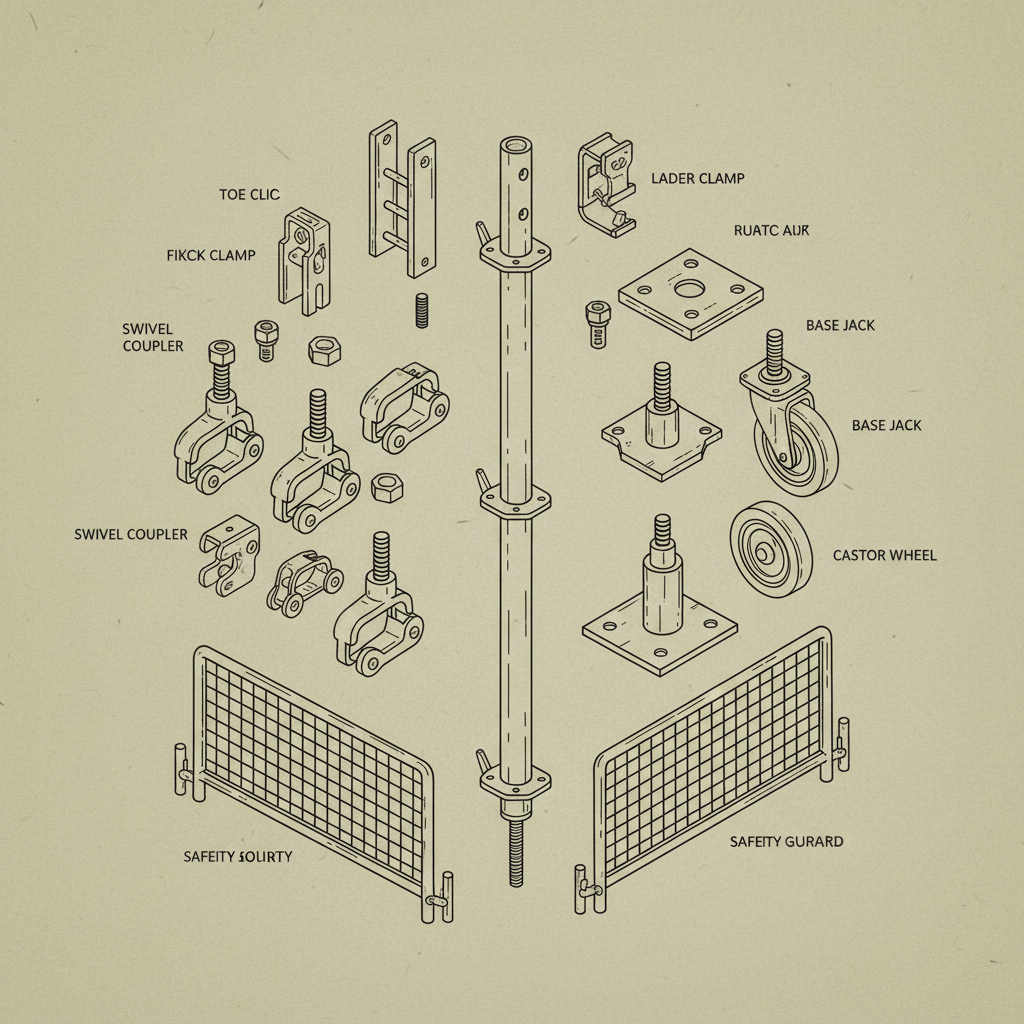
You know, I've been running around construction sites for fifteen years, and honestly, the biggest change I've seen lately is everyone wanting 'smart' everything. Smart scaffolding, smart accessories... sounds fancy, right? But a lot of times, it's just adding complexity where it doesn't need to be. People get caught up in features and forget about the basics. To be honest, I've seen more projects delayed by trying to integrate some newfangled sensor than by actual material shortages.
Have you noticed how everyone's obsessed with lightweight materials? Aluminum alloys are all the rage, and they are good, don't get me wrong. But they feel… different. It's a strange thing to describe. You get used to the heft of steel, the way it sits in your hands. Aluminum feels almost… fragile, even if the numbers say it's just as strong. And the smell! Steel smells like a proper building site. Aluminum? Nothing. It’s unsettling.
Then there's the plastic stuff. PVC, polypropylene… we're using more and more of it for things like guardrails and toe boards. It's cheap, it doesn't rust, and it's light. But it gets brittle in the sun, and it slides. Seriously, you wouldn't believe how many near misses I've seen with workers slipping on plastic toe boards, especially when they’re wet. We had a guy fall last year... luckily, nothing serious, but it could have been. It's a lesson, right?
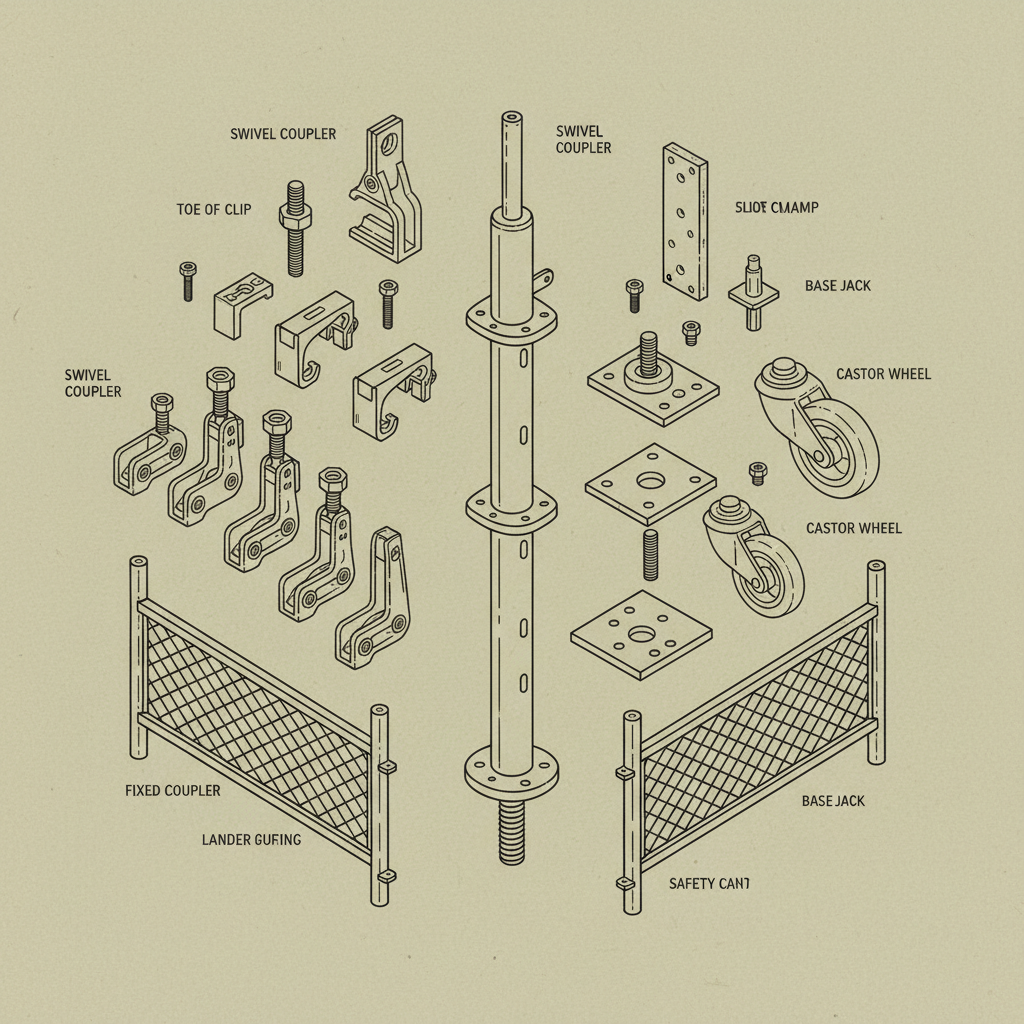
The Latest Trends in Scaffolding Accessories
I think the biggest thing right now, besides the 'smart' stuff, is modularity. Everyone wants systems that can be easily adapted and reconfigured. It makes sense, especially on projects with tight timelines or changing requirements. But strangely, a lot of these modular systems rely on a ton of little bolts and connectors. Lost parts are a nightmare. I encountered this at a factory in Ningbo last time – they were drowning in returned boxes full of missing hardware. And don't even get me started on the different head types...
Another trend is prefabrication. Pre-assembled guardrails, pre-fitted platforms… it speeds up assembly on-site, no doubt about it. But it also means you need to plan further ahead, and you’re less flexible if something changes. It’s a trade-off.
Design Pitfalls and Common Mistakes
The biggest trap I see designers fall into is over-engineering. They add features for the sake of adding features, without really thinking about how things will be used in the real world. Take adjustable base jacks, for example. They’re great in theory, but how often do you see workers actually adjusting them properly? Usually, they just crank them down as far as they’ll go and call it a day. Anyway, I think simplicity is key. If it’s not straightforward, it won’t get used right.
And connection points! This is where things always fail. You need robust, reliable connections that can handle the stress of daily use. I've seen too many systems that rely on flimsy clips or plastic locking mechanisms. They break, they wear out, and they become safety hazards.
Also, nobody thinks about cleaning. Scaffolding gets filthy – mud, grease, paint, you name it. If a connector is hard to clean, it’s going to seize up eventually. It's a small detail, but it makes a huge difference.
Material Choices: From Steel to Composites
Steel is still king, let’s be honest. It’s strong, it’s durable, and it’s relatively cheap. But it’s heavy and it rusts. That’s why we’re seeing more and more aluminum and composite materials. Aluminum is good for lighter-duty applications, like mobile scaffolds and access towers. It’s easier to handle, and it doesn’t rust.
Composites – things like fiberglass reinforced plastic – are getting more popular, too. They’re incredibly strong for their weight, and they’re corrosion-resistant. But they're expensive, and you need specialized tools to cut and drill them. Plus, they don't always play nice with other materials. I once tried to weld an aluminum bracket to a composite platform... it didn’t end well.
Ultimately, the best material depends on the application. There's no one-size-fits-all solution. And sometimes, the old ways are still the best. A well-maintained steel scaffold will outlast a lot of fancy new stuff.
Real-World Testing and Quality Control
Forget the lab tests. Those are fine for getting a baseline, but they don’t tell you how something will perform in the real world. The real test is putting it on a construction site and letting the workers abuse it. Seriously.
I've seen systems that pass all the certifications but fall apart after a few weeks of use. It's because the testing doesn’t simulate the actual stresses and strains that occur on-site – the constant loading and unloading, the impacts, the weather. We do our own testing, basically, we break it on purpose. We load it up, we drop things on it, we leave it out in the rain… if it can survive that, it’s probably good to go.
Scaffolding Accessory Failure Rates (Estimated)
How Workers Actually Use Scaffolding Accessories
This is where things get interesting. You can design the most perfect system in the world, but if the workers don't use it correctly, it's worthless. They’ll always find shortcuts, ways to make things easier (or faster). I’ve seen guys using guardrail posts as ladders, strapping plywood to platforms with duct tape… you name it.
Training is important, of course. But it’s not enough. You need to design things that are intuitive and easy to use, even for someone who hasn’t had a lot of training. And you need to make sure that the accessories are readily available and properly stored. If they have to go searching for a missing bolt, they're going to improvise.
Advantages, Disadvantages, and Customization Options
The advantages of good scaffolding accessories are obvious: increased safety, faster assembly, and greater flexibility. But there are downsides, too. They add cost, they can be complex, and they require maintenance. You need to weigh the benefits against the drawbacks.
Customization is becoming more common. A lot of customers want accessories that are tailored to their specific needs. For example, a customer recently asked us to design a custom guardrail system with built-in cable management for running power tools. It was a pain to engineer, but it solved a real problem for them.
A Customer Story: The Interface Debacle
Last month, that small boss in Shenzhen who makes smart home devices insisted on changing the interface for our mobile scaffold’s locking mechanism to . Said it was “more modern” and “aligned with his brand.” I tried to explain to him that workers aren’t carrying USB-C cables on construction sites, and that a simple pin-lock system is way more reliable, but he wouldn’t listen.
He wanted it, he got it. The first batch went out, and within a week, we were flooded with complaints. Workers were dropping the locking pins, losing the adapters, and generally being frustrated. The whole thing was a disaster. He eventually caved and switched back to the pin-lock system, but it cost him time and money. Honestly, some customers… you just can't reason with them.
It just goes to show, sometimes the simplest solution is the best.
A Rough Breakdown of Scaffolding Accessory Performance
| Accessory Type |
Durability (1-10) |
Ease of Use (1-10) |
Cost-Effectiveness (1-10) |
| Guardrail Connectors |
8 |
7 |
9 |
| Base Jack Mechanisms |
6 |
5 |
7 |
| Platform Boards |
9 |
8 |
8 |
| Toe Board Fasteners |
5 |
6 |
6 |
| Diagonal Braces |
7 |
7 |
8 |
| Ladder Locks |
6 |
4 |
5 |
FAQS
Honestly, it’s not tightening the connections enough. Guys will think it looks secure, but it’s not. We see it all the time. Always double-check everything, even if it seems obvious. It’s about building habits, not relying on luck.
It depends on the load requirements and the environment. Aluminum is great for lighter duty work and indoor projects. Steel is better for heavier loads, outdoor projects, and places where durability is crucial. If you’re unsure, always err on the side of caution and go with steel.
It varies depending on the quality of the material and how it’s used, but generally, you can expect around 5-7 years of heavy use. UV exposure is the biggest enemy. Store them indoors when not in use to extend their lifespan. Inspect them regularly for cracks or damage.
Regulations are always changing, so it’s crucial to stay updated. The latest revisions to OSHA standards focus on fall protection and proper training. Make sure your workers are up-to-date on the latest requirements, and that all accessories meet the necessary safety standards.
Critically important. Neglecting maintenance is a recipe for disaster. Regularly inspect all components for wear and tear, corrosion, and damage. Replace any worn or damaged parts immediately. A little preventative maintenance can save you a lot of trouble—and potentially lives—down the road.
Finding a supplier you can trust. There are a lot of cheap imports out there that don’t meet safety standards. Do your research, check certifications, and don't be afraid to ask questions. A little extra cost upfront for quality accessories is worth it in the long run.
Conclusion
So, yeah, scaffolding accessories – it’s not glamorous work, but it’s important work. It’s about more than just bits of metal and plastic; it’s about keeping people safe, making construction more efficient, and building things that last. You can talk about materials, design, and regulations all day long, but ultimately…
Ultimately, whether this thing works or not, the worker will know the moment he tightens the screw. And if he's not confident in that screw, or in the whole system, then something’s wrong. Check out scaffolding accessories for sale and let us help you build a system you can trust.