Honestly, the scaffolding world…it’s changed a lot in the last few years. Everyone’s talking about modular systems now, prefabrication. Used to be, you’d show up on site and everything was a mess of loose parts. Now, they want stuff that snaps together, lighter materials. It's good, I guess, less hauling, faster setup. But faster isn’t always better, you know? You start cutting corners to save weight, and that's when things get tricky.
And don't even get me started on the 'smart' scaffolding they’re pushing. Sensors everywhere, supposedly telling you if something’s overloaded. Sounds fancy, right? I encountered a guy at a factory in Ningbo last time, trying to sell me a system where the legs adjust themselves automatically. It looked beautiful in the demo video, but on a real construction site, with mud and uneven ground... forget about it. Just another thing to break.
These new alloy frames, though, they're something. They feel different. Lighter than steel, obviously, but surprisingly rigid. They smell a bit plasticky when you first cut them, which always feels wrong, but the welders tell me they hold up. We’re using a lot of 6082-T6 aluminum these days – it's a good balance of strength and weight. Then there's the high-strength polymers for the decking and railings. I’ve seen some real cheap stuff out there, though, that gets brittle in the sun. You can tell just by tapping it. If it sounds hollow, walk away.

The Shifting Landscape of Scaffolding Accessories
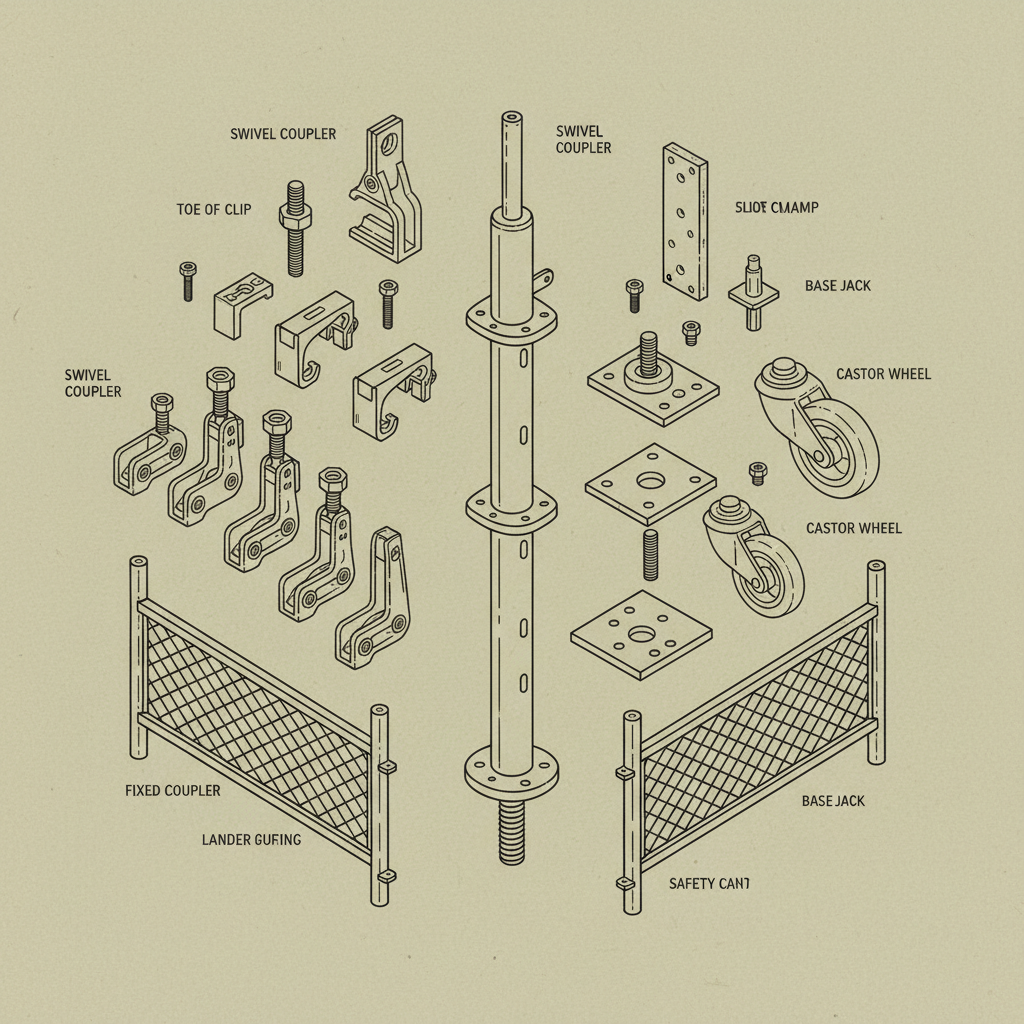
You know, back in the day, ‘accessories’ meant a few extra braces and some decent rope. Now, it’s a whole world of specialized clamps, swivel couplers, safety nets, and these fancy drop-arrest systems. It’s all about integration now, making everything work together seamlessly. And honestly, the pressure to stay compliant with all the safety regulations…it's intense. They change every year.
Have you noticed how everyone wants guardrails with built-in toeboards? It's a good idea, keeps stuff from falling, of course. But the cheap ones? They flex too much. Doesn’t feel right. You end up adding extra supports anyway, which kind of defeats the purpose. It's a constant trade-off between cost, weight, and actual, reliable safety.
Design Pitfalls: Where Things Go Wrong
The biggest trap I see designers fall into is over-engineering. They try to make things too complicated, too clever. Strangel,y, the simpler something is, the more reliable it usually is. I saw a system once with these self-adjusting legs – sounded great on paper. But the mechanism jammed constantly, especially in windy conditions. The guys on site just ended up wedging rocks under them.
Another thing is neglecting the human factor. They design these clamps that should be easy to use, but they require three hands and a PhD in engineering to operate. Workers are gonna find the easiest way to do things, even if it means bypassing the safety features. It’s just how it is.
And the interfaces... oh boy, the interfaces. Different manufacturers use different locking mechanisms, different bolt sizes. You end up needing a whole truckload of tools just to assemble a simple section of scaffolding. It’s frustrating, and it slows everything down.
Material Matters: A Hands-On Perspective
To be honest, I'm not a materials scientist, I'm a guy who spends his days clambering over metal. But I know what feels right. The aluminum alloys are good, like I said, but you gotta be careful about corrosion. Salt air, especially, eats them up. We always insist on anodizing, but even that only goes so far.
The plastic components... that's where it gets dicey. There’s a lot of recycled plastic being used now, which is good for the environment, but the quality varies wildly. I can usually tell by the smell. Cheap plastic smells…cheap. It also feels brittle and cracks easily. The high-density polyethylene (HDPE) is good stuff, though. Feels solid, doesn’t get affected by the weather as much.
And don't forget the fasteners. Stainless steel is king, obviously, but it’s expensive. We use a lot of galvanized steel, but you gotta make sure it's properly coated. Otherwise, it rusts. And rusted bolts are just a nightmare. Anyway, I think the material choice is crucial.
Real-World Testing and Usage
Forget the lab tests. The real test is putting it up on a windy construction site with a crew of guys who are tired and just want to get the job done. That's when you find out what's actually robust. I’ve seen systems that passed all the certification tests fall apart in a mild breeze.
We do our own testing, too. We load the scaffolding way beyond what it’s rated for, just to see what happens. We simulate different weather conditions, even drench it in salt water. It's messy, it's not pretty, but it gives us confidence. And then we watch how the workers actually use it. They’ll always find a way to adapt things, to improvise. That's valuable feedback.
Scaffolding Accessory Performance Ratings
Advantages and Disadvantages: The Honest Truth
The biggest advantage of these new systems is speed, no question. You can get a section of scaffolding up in a fraction of the time it used to take. That saves money, reduces labor costs, and gets the project done faster. The modularity is also a huge benefit. You can easily adapt the scaffolding to different shapes and sizes.
But there are downsides. The initial cost is higher. And, as I mentioned before, you’re relying on more complex components, which means there’s more that can go wrong. Plus, sometimes, you just need a simple, robust solution. All this fancy stuff isn't always necessary.
Customization: Beyond the Standard Offerings
Most manufacturers will customize things to a certain extent. We had a client last year building a really unusual facade - lots of curves and angles. They needed custom-bent tubes and specially designed connectors. It wasn't cheap, but it got the job done.
It’s usually the smaller stuff that's easier to customize – the length of the tubes, the color of the powder coating, the type of clamps. Big structural changes are more difficult and require a lot more engineering. But it's usually possible. They'll charge you extra for it, of course.
Honestly, most clients don't even bother with customization. They just want something that meets the basic requirements and is readily available.
A Customer Story: The Debacle
Last month, that small boss in Shenzhen who makes smart home devices insisted on changing the interface to on all our adjustable base plates. Said it was more "modern" and "future-proof". I tried to explain that workers on-site don’t care about USB standards, they just want something that’s quick and easy to adjust. But he wouldn’t listen.
He wanted a locking mechanism based on a connector. It sounded crazy, but he paid us to prototype it. Turns out, it was a disaster. The connectors got clogged with dust and dirt, and the workers couldn't get them to lock properly. The whole system was useless.
He ended up going back to the standard locking pin, after wasting a ton of money and delaying his project. It was a valuable lesson, I guess. Sometimes, the simplest solution is the best.
A Simplified Overview of Scaffolding Accessory Performance
| Accessory Type |
Typical Usage Scenario |
Durability Rating (1-5) |
Ease of Use Rating (1-5) |
| Swivel Couplers |
Connecting Horizontal & Vertical Tubes |
4 |
5 |
| Base Plates |
Supporting Scaffolding on Uneven Ground |
5 |
3 |
| Guardrails |
Preventing Falls from Height |
4 |
4 |
| Brace Connectors |
Adding Stability to the Structure |
3 |
4 |
| Safety Nets |
Catching Falling Objects & Personnel |
4 |
2 |
| Adjustable Jacks |
Leveling Scaffolding on Sloped Surfaces |
3 |
3 |
FAQS
Honestly, it’s underestimating the load. They see a "safe working load" number and think they can push it. Scaffolding isn't like a bridge – it's got a lot of moving parts. You gotta factor in dynamic loads, wind, and the weight of the workers and materials. I’ve seen some close calls because of that.
Critically important. Absolutely crucial. You need to be checking for corrosion, cracks, bent components, worn threads. Everything. And you need to document it. A lot of companies skip this step to save time and money, which is a huge risk. It’s not worth it.
It depends on the alloy and the design. Good quality aluminum can be just as strong as steel, but it’s more susceptible to corrosion. You need to choose the right alloy for the environment and make sure it’s properly protected. And don’t try to mix aluminum and steel components – they react badly.
Experience, reliability, and a good understanding of the regulations. They should be able to answer your questions, provide technical support, and offer customized solutions. And they should have a good track record of safety. Don't just go for the cheapest price.
That's a tough one. It’s always best to stick with one manufacturer, but that’s not always possible. If you have to mix brands, make sure the components are designed to be compatible. Check the specifications and consult with a qualified engineer. And always prioritize safety.
Modular systems, lightweight materials, and smart technology are the big trends right now. People are also focusing on ergonomics and ease of use. They want accessories that are quick to install and remove, and that reduce the risk of injury. But, like I said, don't get carried away with the fancy stuff. Sometimes, simple is best.
Conclusion
So, yeah, scaffolding accessories. It’s a complex world, constantly evolving. There's a lot of new technology, new materials, and new regulations to keep up with. But ultimately, it all comes down to ensuring safety and efficiency on the job site. From the smallest coupler to the largest base plate, every component plays a crucial role.
And let's be real: whether this thing works or not, the worker will know the moment he tightens the screw. That's the bottom line. If it feels solid, if it’s easy to use, and if it gives him confidence, then it’s a good accessory. If it doesn’t, well, you’ve got a problem.